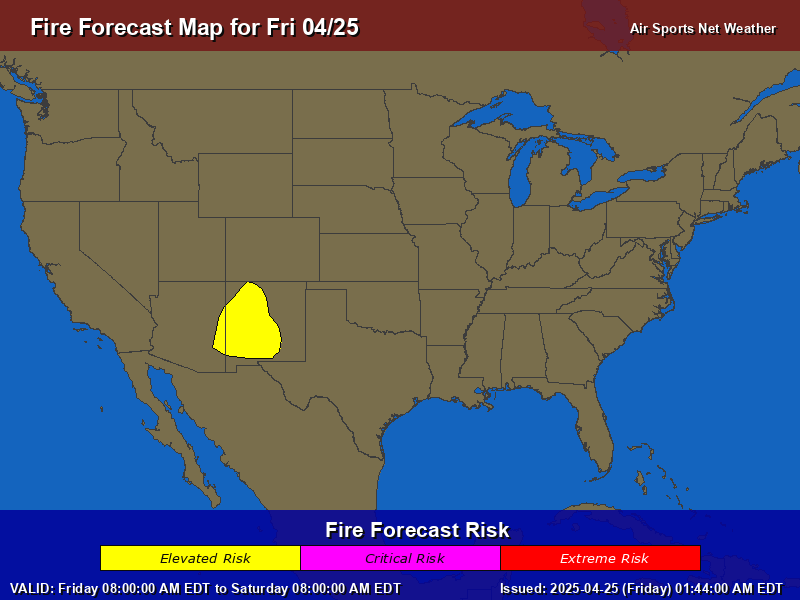
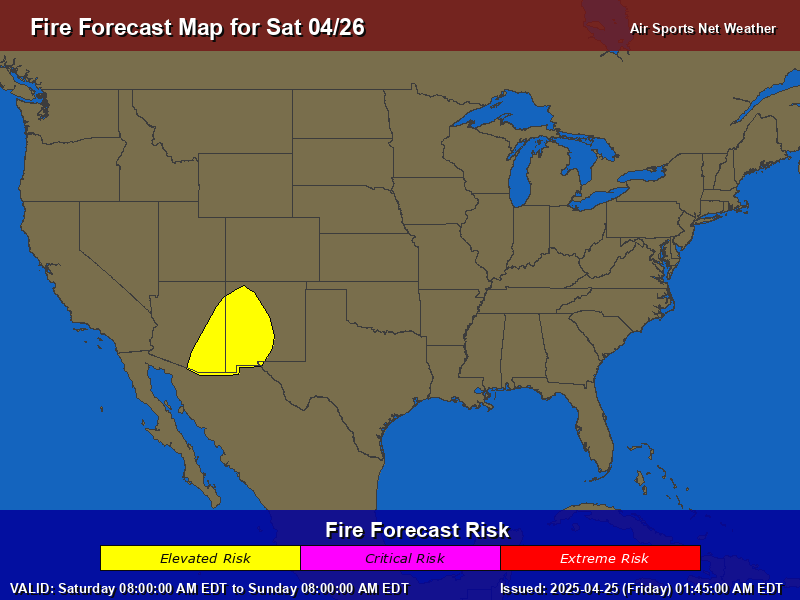
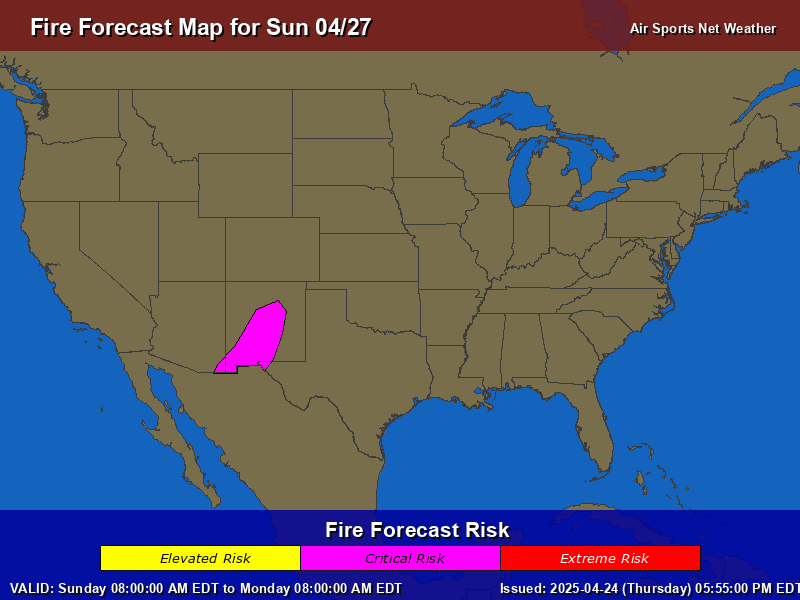
...Update... The latest high resolution model guidance suggests wind speeds may be slightly higher just outside the bounds of the Elevated area. Therefore, a slight modification was made to extend it east and southward. Otherwise, the forecast remains unchanged for today. Please see the previous discussion for additional details.
..Barnes.. 07/05/2025
...Synopsis... A mid-level ridge will continue to build across the southern Rockies through the day. A weak 700 mb jet around the northwestern periphery of the ridge is expected to mix downward amid strong surface heating and provide a focus for fire weather concerns across portions of the Great Basin. Winds may gust to 20-25 mph with 5-15% RH during the afternoon. Therefore, an Elevated highlight has been maintained across portions of southeastern Nevada and southwestern Utah where these atmospheric conditions overlap with dry fuels that have not received wetting rain recently.
General Precautions for Fire Weather
Stay Informed: Monitor weather forecasts and fire warnings from official sources like [Local Fire Department, National Weather Service, etc. Have a battery-powered radio in case of power outages.
Be Aware of Your Surroundings: Pay close attention to your surroundings and be aware of any signs of fire, such as smoke or unusual fire behavior.
Be Ready to Evacuate
Prepare a "Go Bag": Have a readily accessible bag with essential items in case of evacuation, including:
Water
Non-perishable food
First-aid kit
Medications
Flashlight with extra batteries
Important documents (copies)
Clothing for all weather conditions
Cell phone and charger
Pet supplies (if applicable)
Be Prepared
Create a Wildfire Action Plan: Discuss a wildfire action plan with your family, including evacuation routes and meeting points. Practice your plan regularly.
Prepare your Home
Maintain Your Property:
Clear brush and debris around your home.
Keep lawns and vegetation trimmed.
Ensure your address is clearly visible from the street.
Inspect and maintain outdoor equipment (mowers, chainsaws, etc.) to prevent sparks.
Avoid Activities that Could Spark a Fire:
Refrain from open burning, including campfires and backyard fires.
Be extremely careful with smoking materials.
Avoid using fireworks.
Be cautious when operating machinery that could produce sparks, especially in dry grass or brush.
Ensure vehicles are in good working order, with no dragging parts that could create sparks.
If a Wildfire Threatens Your Area:
Evacuate Immediately: If you are advised to evacuate, do so immediately. Do not wait until the last minute.
Follow Evacuation Routes: Follow designated evacuation routes and do not take shortcuts.
Stay Informed: Listen to official sources for updates and instructions.
If Trapped: If you cannot evacuate, seek shelter in a sturdy building away from vegetation. Close all doors and windows and stay inside until it is safe to leave.
Remember: Wildfires can spread quickly and unexpectedly. Being prepared and taking precautions can significantly reduce your risk. Your safety is your responsibility.