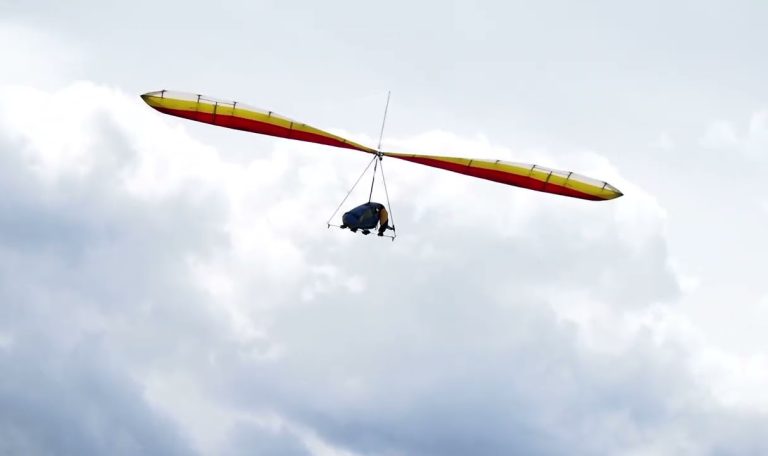
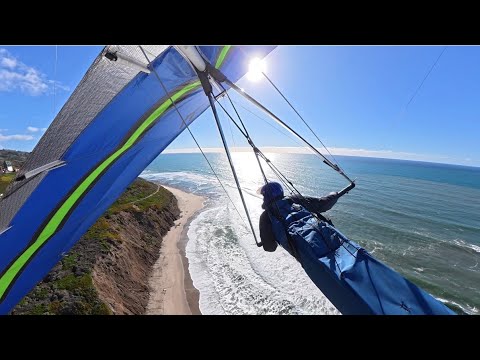
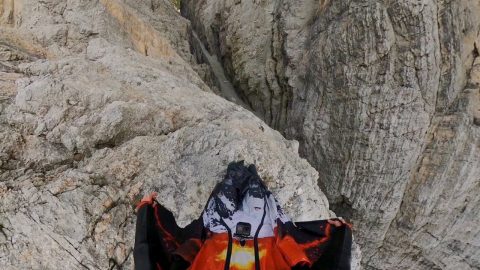
A hang glider launch is usually a smooth transition from running steps into open air — but in a recent hang gliding video circulating among free-flight pilots, one hang glider appears to climb almost immediately after leaving the mountain, rising steeply as if pulled upward by an invisible hand.
What looks like a near-vertical “rocket launch” is actually one of the most dramatic demonstrations of ridge lift, a powerful updraft created when wind strikes a mountain face and is forced upward.
The Mountain Turns Wind Into an Elevator
Hang gliders don’t fly because of speed over the ground — they fly because of speed through the air, known as airspeed. That distinction is crucial when strong wind is moving uphill.
When airflow hits the slope of a mountain, it cannot pass through solid terrain. Instead, it is pushed upward and over the ridge. This creates a zone of rising air called orographic lift, more commonly known as ridge lift. It’s the same process that produces heavy clouds and rainfall on windward mountain faces — except in this case, it produces a climb strong enough to visibly boost the glider moments after launch.
In the video, the pilot exits the ramp and almost instantly enters this rising band of air. The result is a steep climb that can appear nearly vertical from the camera angle.
Why It Looks Like the Glider Goes Straight Up
Ridge lift becomes most intense close to the terrain, especially where the wind meets a steep launch face. Immediately after launch, the pilot is often flying in the strongest part of the lift band. At that point, two things are happening at the same time:
-
The air is rising rapidly along the slope
-
The glider wing is converting the airflow into lift
Hang gliders are efficient wings with relatively low sink rates. In many conditions, the glider’s natural descent rate might be a few hundred feet per minute. But in strong ridge lift, the air itself may be rising at several hundred to well over a thousand feet per minute.
That means the glider doesn’t merely “avoid sinking” — it climbs rapidly because the updraft is stronger than the glider’s sink rate. In simple terms:
If the air is going up faster than the glider wants to go down, the glider goes up.
This is why pilots often describe ridge lift as an “elevator ride.” In strong conditions it can be so immediate that the glider gains altitude before it has even moved far forward from the mountain.
Airspeed vs. Groundspeed: The Key Detail
Another reason the climb looks so dramatic is the difference between airspeed and groundspeed.
If the wind is blowing strongly up the face of the mountain, the glider may have plenty of airspeed — enough airflow over the wing to fly safely — but it may not be moving fast relative to the ground. From the camera’s perspective, the glider rises quickly while drifting slowly away from the launch, which amplifies the “straight up” illusion.
In very strong ridge lift conditions, gliders can even appear nearly stationary over a point on the terrain while climbing, because the air they are flying in is moving upward and toward the ridge.
Why Ridge Lift Is Strongest Right at the Ridge
Ridge lift is often at its most powerful in a narrow band near the terrain where the airflow is deflected upward. Wind can accelerate near ridgelines and launch faces due to compression and terrain effects, strengthening the updraft.
In ideal conditions — smooth, laminar wind hitting the mountain at a favorable angle — the lift band can be wide and consistent. Pilots can then “work the ridge,” flying parallel to the slope and staying in the rising air to maintain altitude or climb.
Spectacular — But Not Always Gentle
While ridge lift is one of the greatest gifts in foot-launched flight, it also comes with hazards.
Wind interacting with steep terrain can create:
-
turbulence near launch
-
wind gradients
-
gust cycles
-
and rotor or sink zones behind ridges
That’s why experienced pilots pay close attention to wind direction, cycles, and launch timing — and why strong ridge lift launches should always be approached with respect.
A Classic Demonstration of Mountain Flying Physics
For pilots and spectators alike, the video is a vivid reminder that a hang glider isn’t “climbing on power” — it’s riding energy that already exists in the atmosphere.
Mountains reshape wind. Wind becomes lift. And when conditions line up, that lift can look downright supernatural.