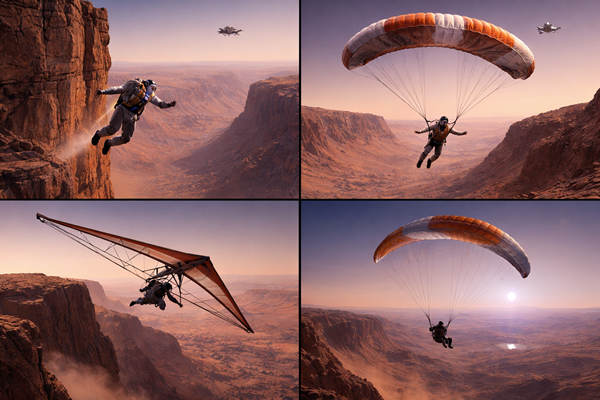
From Artemis II to Olympus Mons: How Air Sports Could Evolve on Mars
Fourth Planet from the Sun – As NASA’s Artemis II mission prepares to send astronauts around the Moon, the conversation has already shifted beyond lunar flybys and short-term exploration. The next logical step—once thought to be decades away—is now openly discussed: a permanent human presence on Mars.
Where humans go, exploration follows. And where exploration thrives, so does play, competition, and risk. Air sports have always lived at the intersection of physics and human curiosity, adapting to new technology and extreme environments. On Mars, the rules would change completely—but they wouldn’t disappear.
Mars offers lower gravity, a thin atmosphere, and some of the most dramatic terrain in the solar system. The result? Air sports that look familiar in spirit, yet utterly alien in execution.
Base Jumping on Mars: Falling Slower, Flying Farther
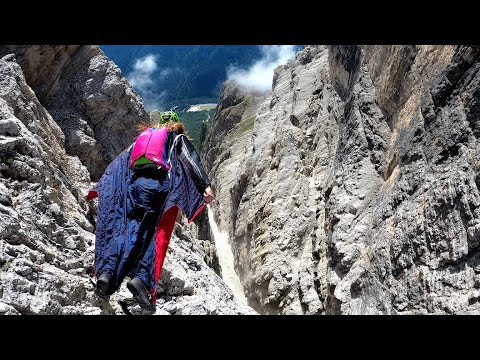
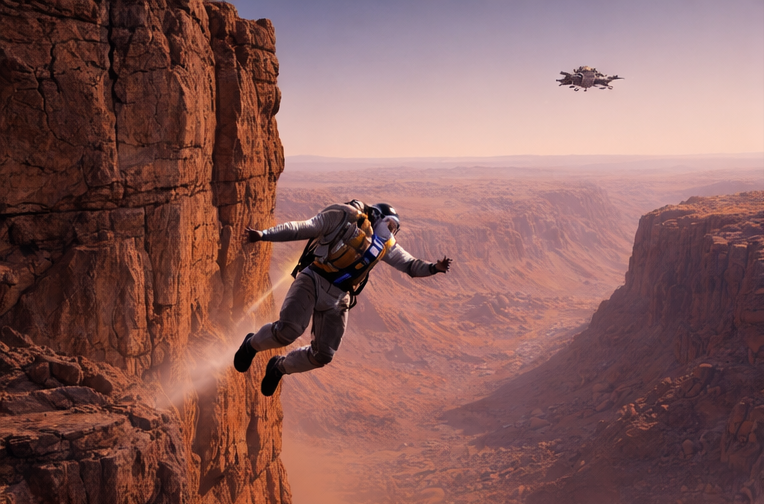 On Earth, BASE jumping is defined by rapid acceleration, limited canopy time, and razor-thin margins. On Mars, gravity is only 38% of Earth’s, meaning jumpers would accelerate much more slowly after exit. That alone would radically change the experience.
With Mars’ thin atmosphere providing minimal drag, a jumper would fall longer before reaching terminal velocity—but terminal velocity itself would be much higher than on Earth. The paradox is striking: slower initial fall, but less natural braking overall. This would likely push Martian BASE jumping toward hybrid systems, combining short freefall phases with specialized high-surface-area canopies or deployable lift surfaces.
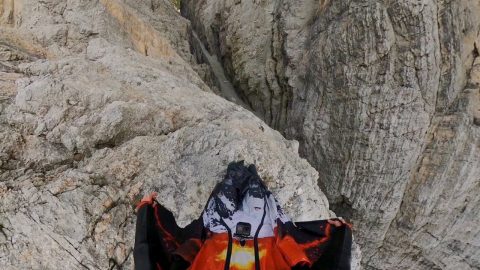
Cliff systems on Mars—particularly the massive escarpments near Valles Marineris—could allow BASE jumps that cover horizontal distances measured in miles, not seconds. Precision would replace speed as the dominant skill.
Skydiving on Mars: From Freefall to Controlled Descent
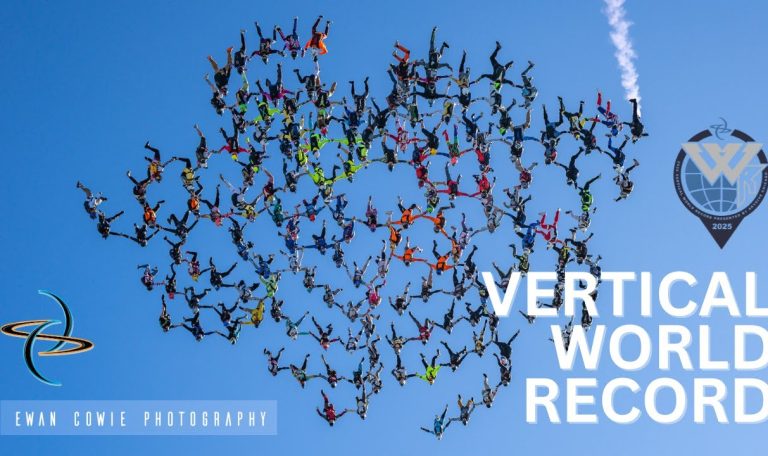
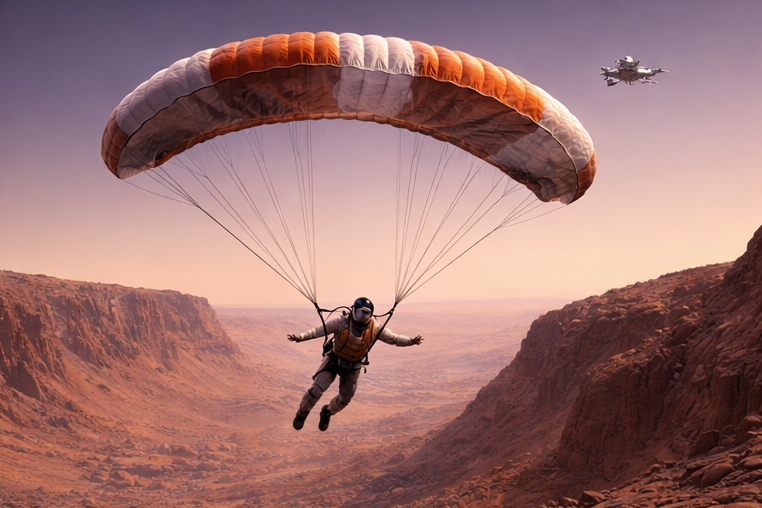 Traditional skydiving as we know it depends on dense air to generate drag, stability, and body control. Mars disrupts all three.
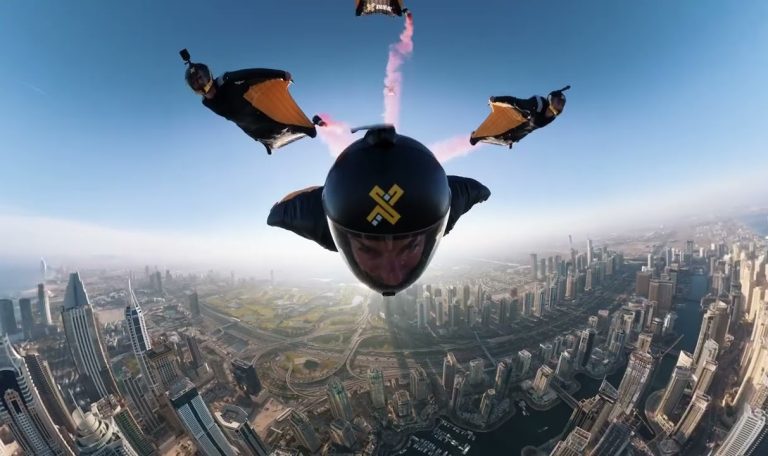
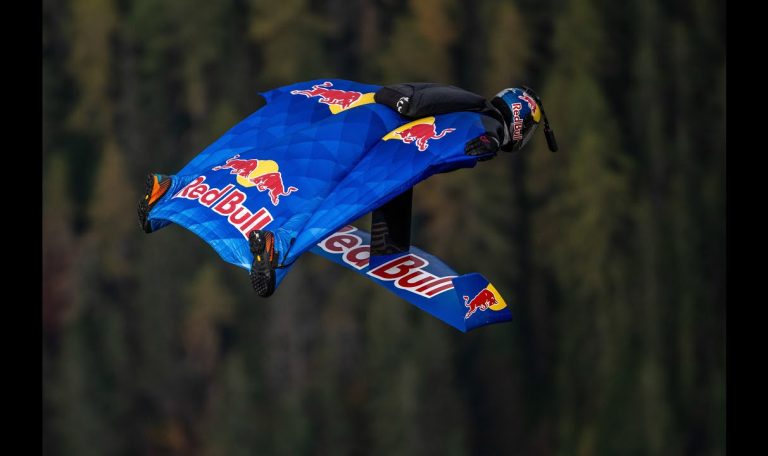
With atmospheric density at roughly 1% of Earth’s, freefall would feel more like orbital descent than skydiving. Body position would have far less influence, making stability difficult without mechanical assistance. To adapt, Martian skydivers would likely wear aerodynamic suits with rigid or semi-rigid lift surfaces, closer to wingsuit frameworks than fabric jumpsuits.
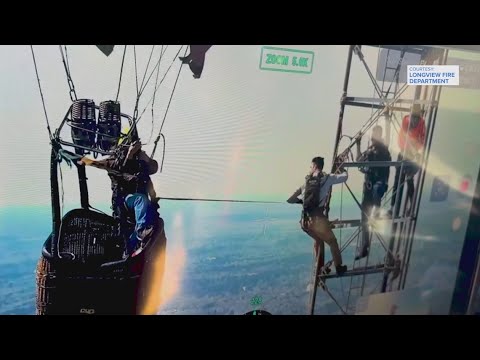
Parachutes would need to be enormous, ultra-light, and possibly staged—deploying in multiple phases to avoid canopy collapse. Jumps would likely originate from pressurized aircraft or high-altitude balloons, making skydiving more deliberate, slower-paced, and heavily engineered.
It wouldn’t be about speed. It would be about mastering descent in an environment that barely wants to slow you down.
Hang Gliding on Mars: Soaring in Slow Motion
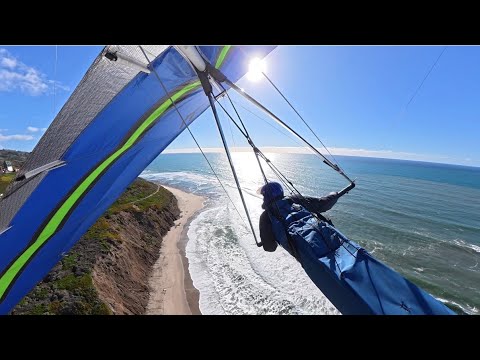
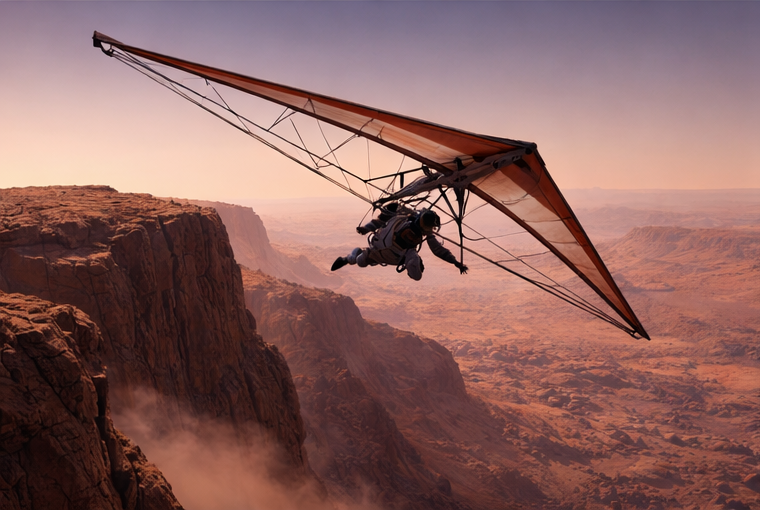 Hang gliding may be one of the most promising air sports for Mars. While the atmosphere is thin, it does exist—and Mars offers immense vertical relief and long, uninterrupted ridgelines.
To generate lift, Martian hang gliders would need massive wingspans and extremely low wing loading. The physics are simple: lift equals air density times velocity times wing area. When density drops, area must increase. The result would be gliders that look almost skeletal, borrowing materials and design concepts from space structures.
Once airborne, however, pilots could experience extraordinary glide ratios. Lower gravity means slower sink rates, allowing flights that last hours and cover incredible distances. Soaring along volcanic ridges like Olympus Mons could redefine what “cross-country” means in aviation.
Paragliding on Mars: “Watch This”
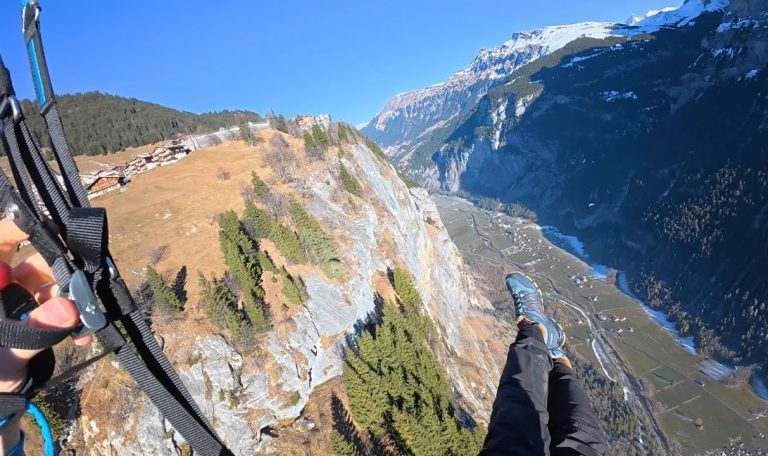
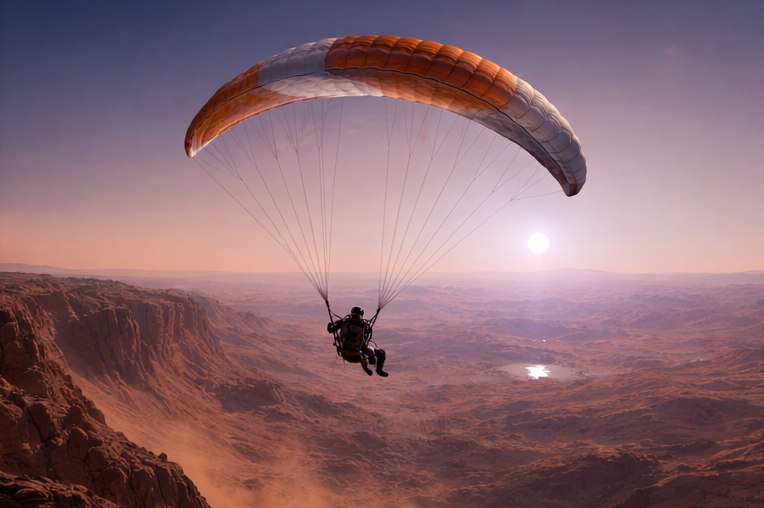 Paragliding, perhaps more than any other air sport, is about simplicity. A wing. A harness. A launch. On Mars, that simplicity would be tested—but not lost.
A Martian paraglider would need a wing many times larger than Earth designs, constructed from ultra-thin, high-strength materials. Inflation would be slow and deliberate, and launches would likely require assisted takeoffs—ramps, tow systems, or natural cliff edges.
Once airborne, though, the experience could be surreal. With reduced gravity and low air resistance, pilots might float across vast landscapes in near silence, tracing terrain in long, graceful arcs.
And this is where history tends to repeat itself. The first Mars base would almost certainly ban recreational flight. The second or third generation of settlers? Someone will step outside the habitat, look at the terrain, shoulder a wing, and say:
“Watch this.”
That moment may not be sanctioned—but it will be inevitable.